
Tailbone Pain From Sitting at a Desk: What's Causing It in 2026
-
Cause #1 — Hours of Direct Load on a Small Bone
Why the coccyx takes the brunt of your weight the longer a sitting session runs. -
Cause #2 — Slouching and Leaning Back
How a tucked pelvis rolls your weight off the sit bones and onto the tailbone. -
Cause #3 — Hard, Narrow, or Unpadded Seats
Why the chair surface itself decides whether the coccyx ever gets relief. -
Cause #4 — Pelvic Floor Tension Referring Pain
When the bone is fine but tight pelvic muscles are sending the ache.
If there's a deep, bruised ache right at the base of your spine that flares the moment you sit down and eases the second you stand, you're almost certainly dealing with your coccyx — the tailbone. Patients describe it the same way over and over: a sharp point of pressure that makes the last hour of a workday miserable, gets worse when they lean back, and feels best when they perch forward on the edge of the chair.
Here's the part most people miss. The tailbone isn't built to carry your bodyweight. Your two sit bones are. When you sit the way most desk workers sit — slumped, leaned back, on a flat seat for hours — your weight rolls backward off those sit bones and onto the coccyx, a small triangle of fused vertebrae that has almost no padding over it. The clinical literature calls the result coccydynia, and notes the pain is classically worse with sitting and with leaning backward.
The good news: tailbone pain that comes purely from sitting is one of the most fixable problems I see, and the fix usually doesn't require a doctor. It requires getting your weight off the coccyx and back onto the structures designed to carry it. Below I answer the questions I hear most, give you a way to match your symptoms to the right cause, and walk through the four reasons your tailbone hurts at your desk — and the specific change that takes the pressure off.
Can Sitting Too Long Actually Cause Tailbone Pain?
Yes. Sitting is the single position that loads the coccyx, and doing it for hours is the most common reason desk workers develop tailbone pain. On a hard or flat seat, the small bone at the base of your spine absorbs concentrated pressure the whole time you're down — and repeated low-grade compression, day after day, inflames the ligaments and soft tissue around it. That's why this shows up in desk workers and long-haul drivers, not in people who are on their feet all day. Because the cause is mechanical, the relief is usually mechanical too.
How Do I Relieve Tailbone Pain From Sitting?
Start with the three changes that work fastest. Put a coccyx cut-out cushion on your chair so the tailbone hangs free and your sit bones carry the weight. Stop slouching back into the seat — keep the pelvis neutral or tipped slightly forward. And stand and walk for a minute every 30 to 45 minutes to break up the continuous load. Most sitting-related tailbone pain eases within a few weeks once those are in place. If yours doesn't, the fix depends on which of the four causes below you actually have — or you can have it diagnosed directly with our free desk assessment.
How Should I Sit to Take Pressure Off My Tailbone?
Aim your weight onto your two sit bones, not the coccyx. Sit fully back so the chair supports your lower back, keep your pelvis upright rather than tucked under, and set your seat height so your feet rest flat with your knees near hip level. When you first sit down, lean slightly forward as you land — Mayo Clinic recommends this specifically because it keeps your weight off the tailbone. A coccyx cut-out cushion holds that good position for you so it stops being something you have to think about every few minutes.
Match Your Symptoms to the Cause
Tailbone pain from sitting usually traces to one of four things, and each has a different fix. Find the row that sounds most like what you're feeling, then jump to the full breakdown:
| What you're feeling | Most likely cause | The fix |
|---|---|---|
| A bruised, focal ache at the base of the spine that builds the longer you sit and eases when you stand | Hours of direct pressure | Stand-and-walk breaks every 30–45 min; a walking pad for part of the day |
| Pain that's worse when you slouch or lean back, better when you perch forward on the seat edge | Slouching rotates load onto the coccyx | Neutral pelvis, forward lean as you sit down, supportive chair and footrest |
| Sharp pressure on a hard, flat, or narrow seat, with nowhere for the bone to go | Unpadded seat surface | Coccyx cut-out cushion that suspends the tailbone |
| Deep ache that ignores cushions and posture changes, sometimes with other pelvic symptoms | Pelvic floor tension referring pain | Referral to a pelvic floor physical therapist |
If two rows sound like you, that's common — these causes stack. Work through each matching cause below.
1. Hours of Direct Pressure on a Small Bone — Why Your Tailbone Aches After Sitting Too Long
The single most common driver I see is simply time. Cleveland Clinic is blunt about it: sitting for long periods places excess pressure on the tailbone, and that pressure is worse on hard surfaces. The coccyx sits at the very bottom of the spine with very little fat or muscle cushioning it, so when you stay seated for an hour, then two, then three, that small bone is absorbing concentrated load the entire time.
Clinicians call this repetitive microtrauma — the same low-grade compression, over and over, until the ligaments and soft tissue around the coccyx become inflamed. StatPearls lists prolonged sitting and repetitive microtrauma directly among the causes of coccydynia. It's why the pain so often shows up in desk workers and long-haul drivers and not in people who are on their feet all day.
The first thing I tell these patients is the cheapest: get up. A brief stand-and-walk every 30 to 45 minutes interrupts the continuous loading long enough to let blood flow back into the tissue. The strongest version of that advice is to spend part of the day not sitting at all — and a walking pad under a standing desk does exactly that. For every stretch you're on it, your weight is in your legs and the coccyx carries nothing. There's no pressure to relieve when there's no pressure.
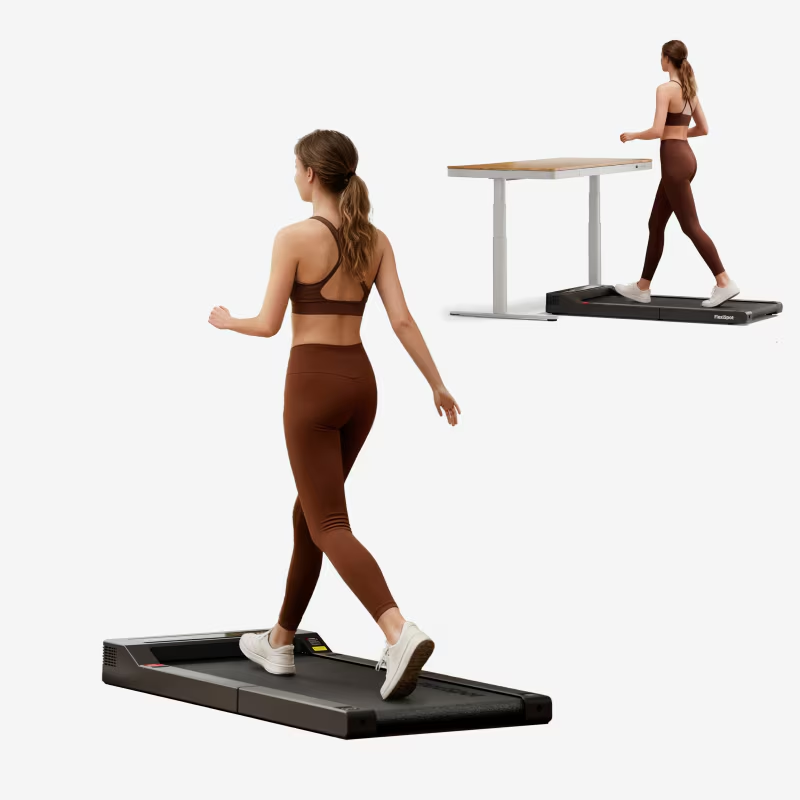
The walking pad I recommend for breaking up sitting
The Flexispot 180° Foldable Walking Pad is the top-scoring treadmill of the 14 I assessed, and it's the one I point tailbone-pain patients to first. The deck is stable and the speed control is responsive enough to walk and work at the same time, and it folds flat to slide away when you're done. If you can pair it with a standing desk, alternating an hour walking with an hour seated keeps the coccyx from ever taking a full day's load.
 Check Price →
Pros
- Highest clinical score of any treadmill assessed
- Stable deck and responsive speed control
- Folds flat for small spaces
Cons
- Warranty only meets category standard
- Needs a standing desk or converter to use at your workstation
For the hours you are seated, the most effective fix is to stop letting the tailbone bear the load at all — which is where a coccyx cut-out cushion comes in. More on that under Cause #3.
2. Slouching and Leaning Back Rotate the Load Onto the Coccyx
This is the posture problem, and it's the one people are most surprised by, because it feels like the comfortable way to sit. When you slouch or recline against the backrest, your pelvis rotates backward into what's called posterior pelvic tilt. That motion lifts your weight off the sit bones and tips it straight back onto the tailbone.
Orthopedic specialists describe it plainly: slouching or leaning backward places the coccyx in an unnatural position and strains the surrounding ligaments and tissue. Mayfield Clinic notes the coccyx can be injured by excessive flexing while sitting, and StatPearls specifically flags that coccyx pain is exacerbated by leaning backward.
The fix runs in two directions. Mayo Clinic recommends leaning slightly forward when you sit down, which keeps your weight on the sit bones instead of rolling it back to the coccyx. But "sit up straight" is advice nobody can hold for eight hours. The durable answer is a supportive chair and cushion setup that holds the pelvis in a neutral position for you, so good posture stops being something you have to constantly remember.
3. Hard, Narrow, or Unpadded Seats Concentrate Everything on the Tailbone
The chair surface matters more than almost anything else for this specific pain. Mayo Clinic notes tailbone pain often results from sitting a long time on a hard or narrow surface, and orthopedic sources point to direct pressure and inadequate cushioning as a core mechanism. A hard, flat seat gives the coccyx nowhere to go — it presses the bone straight into the surface every minute you sit.
This is where the most reliable fix for desk-related tailbone pain lives, and it's an inexpensive one: a coccyx cut-out cushion. These are wedge or U-shaped foam cushions with a channel carved out of the back so that the tailbone hangs in open air while your sit bones and thighs carry the weight. Physiopedia describes wedge-shaped coccygeal cushions as a standard way to relieve pressure on the coccyx during sitting. It's the closest thing to a guaranteed win I have for this complaint.
Across the 21 seat cushions I assessed for DeskDoctor, the cut-out designs consistently outperform plain memory-foam pads for tailbone relief, because the relief comes from the geometry, not the padding. The two I reach for first both score in our DeskDoctor Recommended range.
The cut-out cushion I recommend first
The ComfiLife Gel & Memory Foam Seat Cushion is the one I hand most patients with tailbone pain. The U-shaped rear cut-out genuinely suspends the coccyx, and the gel-over-foam top keeps it from bottoming out over a full workday. If your tailbone aches by mid-afternoon, this is the change that fixes it.
 Check Price →
Pros
- True rear cut-out suspends the coccyx
- Gel-over-foam resists bottoming out all day
- Excellent long-term user reliability
Cons
- Fixed shape — no adjustability
- Warranty only meets category standard
A close second with a stronger warranty
The Everlasting Comfort Memory Foam Seat Cushion uses the same coccyx cut-out principle and earns the identical composite, with a noticeably better warranty if you want more backing behind the purchase. Either of these will take the load off your tailbone — pick on price and feel.
 Check Price →
Pros
- Same coccyx cut-out decompression
- Stronger warranty than category standard
- Excellent long-term user reliability
Cons
- All-foam top softens faster than gel for heavier users
- Fixed shape — no adjustability
4. Pelvic Floor Tension Can Refer Pain to the Tailbone
This one trips people up because the bone itself can be perfectly healthy. The pelvic floor muscles attach to the coccyx, and when they're tight, in spasm, or weak, they can refer a deep ache straight to the tailbone. Physical therapy sources identify pelvic floor dysfunction as a genuine contributor to coccyx pain, and note that the same prolonged sitting that loads the bone also keeps these muscles clenched.
If your tailbone pain doesn't improve at all with a cut-out cushion and posture changes — or if it comes with other pelvic symptoms — this is the lane to investigate, and it's worth a referral to a pelvic floor physical therapist. The same sources report consistent improvement in coccyx pain with pelvic PT. A cushion takes the mechanical load off; it can't release a muscle that's stuck in a guarded contraction.
- Add a coccyx cut-out cushion to your chair so the tailbone hangs free and your sit bones carry the weight.
- Sit back into the chair so your hips reach the seat's rear, then let the backrest support your lower back rather than your tailbone.
- Set seat height so your feet rest flat and your knees sit at roughly hip level — drop the seat or add a footrest if your feet dangle.
- Aim your pelvis slightly forward, not tucked under. When you catch yourself slouching, reset by rocking forward onto the sit bones.
- When you sit down, lean slightly forward as you land to keep your weight off the coccyx, as Mayo Clinic recommends.
- Stand and walk for a minute every 30 to 45 minutes to interrupt continuous loading on the bone.
Pressure-Loaded Coccyx
Posture-Driven Pain
Pelvic Floor Referral
Why does my tailbone hurt only when I sit?
Because sitting is the position that loads the coccyx. When you stand, your weight goes through your legs; when you sit slumped or on a hard seat, it rolls back onto the tailbone. That's the textbook pattern for coccydynia — pain that flares with sitting and eases when you stand or walk.
Does a seat cushion actually help tailbone pain?
A coccyx cut-out cushion does, yes — and it's one of the most reliable fixes there is. The cut-out channel lets the tailbone hang free while your sit bones and thighs carry the load. Wedge and U-shaped cushions are a standard clinical recommendation for relieving coccyx pressure during sitting.
Should I use a donut cushion for tailbone pain?
Usually not. Donut (ring) cushions are the most common first purchase, but for the tailbone they can actually increase pressure over the coccyx. They're better suited to rectal pain. For coccyx pain specifically, choose a wedge or U-shaped cut-out design instead.
How many seat cushions did DeskDoctor review?
We assessed 21 seat cushions against the DEAS framework. The two I recommend first for tailbone pain — the ComfiLife Gel & Memory Foam and the Everlasting Comfort Memory Foam, both coccyx cut-out designs — landed in our DeskDoctor Recommended range, largely because the relief comes from the cut-out geometry rather than padding alone.
How long does tailbone pain from sitting take to go away?
Pain that's purely from pressure and posture often improves within a few weeks once you take the load off the bone and break up long sitting sessions. If a cut-out cushion plus regular standing breaks hasn't moved things in three to four weeks, the cause may be soft tissue — like the pelvic floor — and it's worth seeing a clinician.
When should I see a doctor about tailbone pain?
If the pain is severe, follows a fall or injury, persists beyond about a month despite self-care, or comes with other symptoms, see a clinician experienced in evaluating coccyx pain. Most cases resolve with conservative care, but persistent pain deserves a proper assessment.
Take the DeskDoctor Virtual Assessment
A cushion is one piece of the picture. If you're not sure whether your tailbone pain is coming from your seat, your posture, or something the chair can't fix, the free virtual assessment delivers a personalized setup plan, recovery guide, and equipment matches in about 12 minutes.
Take the Free Assessment →Affiliate disclosure: DeskDoctor is reader-supported. Some links in this article are affiliate links, and we may earn a commission on qualifying purchases at no additional cost to you. Product recommendations are based on our independent DEAS assessments and are never influenced by affiliate relationships.
Clinical disclaimer: This article is for educational purposes only and is not a substitute for professional medical advice, diagnosis, or treatment. Tailbone pain can have several causes. If your pain is severe, follows an injury, or persists, consult a qualified healthcare provider.
0 Comments