
Massage for Desk Pain: What Actually Works in 2026
-
What massage can and can't do
The honest version: real short-term relief, but it doesn't fix the cause. -
Neck tension & tech neck
The trapezius knots that build from looking down at a screen. -
Shoulder knots & rounded shoulders
The mouse-side burn between shoulder blade and spine. -
Upper & lower back tightness
Where percussion and a self-targeting cane each earn their place. -
Wrist & hand fatigue
Tired, stiff hands after a day of typing and clicking. -
Forearm & elbow overload (mouse arm)
The gripping-and-clicking tightness that feeds tennis elbow. -
One tool for multiple areas
If you'd rather buy one versatile device than five.
It's the end of the workday and you find yourself doing the thing — reaching up to dig a thumb into the side of your neck, rolling a shoulder that won't quite loosen, pressing on the rope of muscle along your spine. Your body is asking for pressure. That instinct is sound: kneading a tight, achy muscle genuinely helps, and a good massage tool lets you do it on demand instead of waiting two weeks for an appointment.
But I want to be straight with you about what these tools are, because it shapes which one you should buy. Massage is symptom relief. It loosens the knot, calms the ache, and buys you a few hours of feeling better — and the research backs that up for short-term pain and stiffness. What it does not do is change the posture or the workstation that tightened the muscle in the first place. Used that way — as relief, not as a cure — it's one of the more satisfying purchases you can make for desk pain.
This guide walks through the muscle groups desk work overloads most, summarizes what the research actually shows about massage for each, and points to the specific tools worth owning. I scored 49 massage products through our DEAS framework to build the picks — the standouts are below, and every other one I reviewed is listed in the FAQ.
What Massage Can and Can't Do for Desk Pain
Desk pain is mostly a muscle-tension problem. Holding the same posture for hours keeps certain muscles in a constant low-grade contraction, and over time they develop tight, tender spots — the knots clinicians call myofascial trigger points. Sitting at a computer for long periods is named as one of the most common causes of exactly these trigger points. Pressure — from a thumb, a massage therapist, or a tool — encourages that locked tissue to relax.
The evidence is encouraging but honest about its limits. A systematic review of 15 trials on neck pain found moderate evidence that massage improves pain in the short term, while noting it didn't clearly improve function and that long-term benefits weren't established. A Cochrane review on low back pain reached a similar verdict: short-term relief, low-quality evidence, no proof of lasting change. For the powered tools, a review of massage guns found they reliably improve short-term range of motion, flexibility, and stiffness, and self-massage with rollers increases joint range of motion without hurting muscle performance.
Neck Tension & Tech Neck
Hours spent looking slightly down at a screen keep the muscles along the back of the neck and the top of the shoulders working the whole time. They don't get to rest, so they tighten into the band of stiffness people call tech neck — worst by late afternoon, and dotted with tender knots you can feel with your fingers.
This is the area with the strongest massage evidence, and you've got two good routes: a powered shiatsu unit that does the kneading for you, or a manual cane that lets you drive precise pressure into a specific knot. Both work; the choice is really about whether you want hands-free convenience or pinpoint control.
Hands-free relief — Nekteck Shiatsu Neck & Back Massager
Powered shiatsu
When your neck and upper traps are just globally tight and you don't want to work at it, this drapes over the shoulders and kneads both sides at once with optional heat — it's the one I point most desk workers to for easy, end-of-day neck relief.
Check Price →Pinpoint a specific knot — Aletha Cane Neck Massager
Manual trigger-point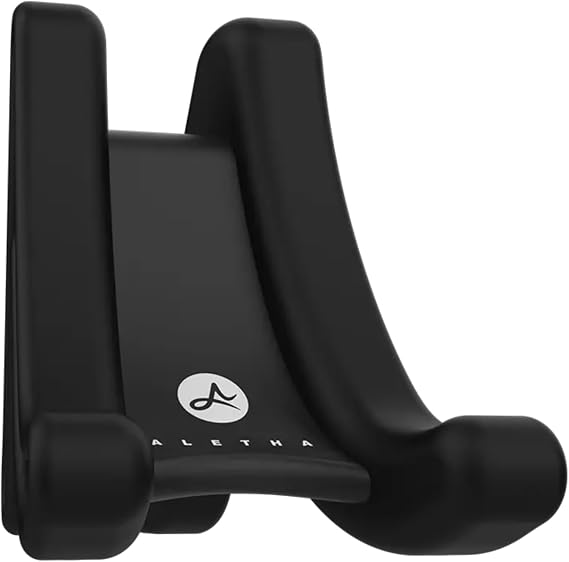
If your problem is one stubborn knot you can point to, a hooked cane beats a kneading machine — it lets you put exact, controlled pressure on that spot and hold it, which is how trigger-point relief actually works.
Check Price →Shoulder Knots & Rounded Shoulders
Reaching forward for a keyboard and mouse all day pulls the shoulders into a rounded position and overloads the upper trapezius and the muscles around the shoulder blade — usually worse on your mouse side. It shows up as a deep knot between the shoulder blade and spine and a dull burn across the top of the shoulder.
Massage gives reliable short-term relief here, and because the spot sits in an awkward place to reach yourself, a powered unit that hooks over the shoulder and kneads the area hands-free is the practical winner for most people.
Best for shoulder knots — Zyllion Shiatsu Shoulder Massager
Powered shiatsu
The shoulder is hard to massage well on your own, which is exactly why this earns its spot — it holds itself over the area and kneads the knot between your shoulder blade and spine without you having to contort an arm behind your back.
Check Price →Upper & Lower Back Tightness
Slumping forward loads the muscles running alongside the spine and lets the upper back round and the lower back lose its natural curve. The result is tightness that spans a big area — sometimes a broad ache across the upper back, sometimes a focused band low in the lumbar region.
Because the back covers so much ground, two different approaches both make sense. A percussion massage gun is fast and effective for broad muscle tightness and is well supported for improving range of motion and easing stiffness. A self-massage cane, by contrast, is unbeatable for reaching one specific knot between the shoulder blades that you simply can't get to with your hands.
For broad back tightness — TOLOCO Massage Gun
Percussion
For a back that's tight across a wide area rather than one pinpoint spot, percussion covers ground fast — this is the highest-scoring tool in the guide, and a few minutes along the muscles beside your spine loosens them more efficiently than you can by hand.
Check Price →For an unreachable knot — Thera Cane Original Back Massager
Manual trigger-point
The knot between your shoulder blades is the one you can never quite reach — this hooked cane gets there and lets you apply firm, held pressure exactly where you need it, which is why it ties for the top score and has lasted in clinics for decades.
Check Price →Wrist & Hand Fatigue
A full day of typing and clicking keeps the small muscles of the hand and the tendons crossing the wrist working without a break. By evening the hands feel stiff, tired, and achy — not injured, just overworked. Gentle massage and compression help that fatigue ease off.
The honest read here: hand massagers are comfort tools more than clinical ones, which is reflected in their scores. If your symptoms are tingling or numbness rather than plain fatigue, that points toward nerve involvement and is worth a clinician's look rather than a gadget. For tired, stiff hands, though, you've got a manual option and a powered one.
Simple and effective — Gaiam Restore Manual Hand Rollers
Manual
For stiff, tired hands these cost almost nothing and just work — you roll out the palm and fingers in a couple of minutes at your desk, and the top score in this group reflects how much value that simplicity delivers.
Check Price →Hands-free compression — Lunix LX7 Hand Massager
Powered compression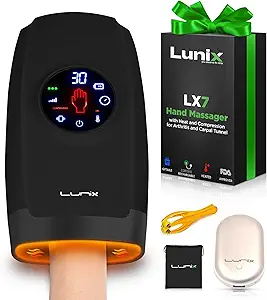
If you'd rather slip your hand in and let it work, this wraps the whole hand in air-compression massage with optional heat — a step up in cost and comfort for end-of-day hand fatigue when you don't feel like rolling anything yourself.
Check Price →Forearm & Elbow Overload (Mouse Arm)
Gripping a mouse and clicking thousands of times a day loads the muscles of the forearm right where their tendons anchor at the outside of the elbow. Pushed far enough, that's how desk workers end up with lateral epicondylitis — tennis elbow — without ever picking up a racket. Before it gets there, it's just a tight, tender forearm.
Massaging the forearm is genuinely useful for that tightness, but it's awkward to do by hand. A roller built to clamp around the forearm lets you apply even pressure along the muscle without your other hand getting tired — the kind of self-myofascial release shown to improve range of motion and ease muscle tension.
Best for the forearm — Rolflex Arm & Forearm Roller
Manual roller
The forearm is genuinely hard to massage with your other hand, and this solves it — you set the clamp pressure and roll the whole muscle in one pass, which is the most practical way I've found to work mouse-arm tightness before it turns into tennis elbow.
Check Price →One Tool for Multiple Areas
If buying a separate device for each body part sounds like overkill, you're not wrong — for a lot of people the smarter move is one versatile tool that reaches everything. A percussion massage gun is the best all-rounder: with different heads it works the neck, shoulders, back, and legs, and the evidence for percussion on range of motion and stiffness applies wherever you point it.
Best all-rounder — RENPHO Massage Gun
Percussion
If you only want to buy one thing, make it this — the swappable heads and speed range let it cover your neck, shoulders, back, and legs from a single device, which is far better value than a drawer full of single-purpose gadgets.
Check Price →| Area | Top pick | DEAS | Type |
|---|---|---|---|
| Neck / tech neck | Nekteck Shiatsu Neck & Back | 6.8 | Powered shiatsu |
| Shoulder | Zyllion Shiatsu Shoulder | 6.8 | Powered shiatsu |
| Back (broad) | TOLOCO Massage Gun | 6.9 | Percussion |
| Back (pinpoint) | Thera Cane Original | 6.9 | Manual cane |
| Wrist / hand | Gaiam Restore Hand Rollers | 6.8 | Manual |
| Forearm / elbow | Rolflex Arm & Forearm Roller | 6.7 | Manual roller |
| Multiple areas | RENPHO Massage Gun | 6.8 | Percussion |
- Work the muscle, not the bone or joint. Keep pressure on the soft, fleshy areas and avoid pressing directly on the spine, the front of the neck, or any bony point.
- Keep it brief. A minute or two per spot is plenty; for a trigger point, hold steady pressure for 20 to 60 seconds rather than grinding away at it.
- Aim for “good sore,” not sharp pain. Firm pressure that eases as you hold is fine; anything that produces sharp, shooting, or radiating pain means stop.
- With a massage gun, keep it moving slowly along the muscle and stay off bones, joints, and the front and sides of the neck.
- If you have tingling, numbness, or shooting pain, that points to nerve involvement — ease off and have it looked at rather than massaging through it.
- Pair it with movement. A short walk or a few posture resets after massage extends the relief far longer than the massage alone.
Broad, all-over tightness
One specific knot
Hard-to-reach or hands-free
Does massage actually fix desk pain, or just mask it?
It relieves it in the short term — the research consistently shows massage reduces pain and tightness and improves range of motion for a while afterward. What it doesn't do is correct the posture or workstation that caused the tension, so the knot tends to come back. Think of it as effective relief that buys you comfort, not a permanent fix. The permanent fix is in your setup.
Massage gun, manual cane, or powered shiatsu — which should I get?
Match it to the problem. A percussion massage gun is best for broad tightness across a big muscle and is the most versatile if you only want one tool. A manual cane or ball is best for driving precise pressure into one specific knot, especially one you can't otherwise reach. A powered shiatsu unit is best for hands-free relief of the neck and shoulders when you don't want to do the work yourself.
How long and how often should I use one?
Keep each spot brief — a minute or two with a gun or shiatsu unit, or 20 to 60 seconds of held pressure on a trigger point. You can do this daily. Aim for firm, “good sore” pressure that eases as you hold; stop if it produces sharp, shooting, or radiating pain.
Is it safe to use a massage gun on my neck?
Use caution. Keep a massage gun on the muscular areas of the upper shoulders and the back of the neck only, moving slowly, and stay off the spine and entirely away from the front and sides of the neck, where there are arteries and other structures you don't want to percuss. For the neck specifically, a shiatsu unit or a manual tool is often the safer, easier choice.
What should I look for when buying a massage tool?
Decide first whether you want powered or manual — powered tools do the work for you and reach awkward spots; manual tools are cheaper, need no charging, and give you precise control. Then look at fit for the target area (a shoulder unit that stays put, a forearm roller that clamps evenly), adjustability (speed or pressure settings so you can dial in intensity), and build quality, since cheap motors and weak frames are the usual failure points. Don't over-buy: the most expensive device isn't automatically the most useful for your specific knot.
How many products did you review for this guide?
I scored 49 massage products through the DEAS framework, covering the neck, shoulder, upper and lower back, wrist and hand, forearm and elbow, plus versatile tools that work across multiple areas. Several of the multi-area tools, like massage guns and rollers, naturally show up for more than one body part. The featured picks above are the standouts, and every other product is listed below.
What other massage products were reviewed but didn't make the featured picks?
Here is every other product I scored, grouped by area, with its DEAS score. Many are perfectly decent — they simply lost out to the featured pick on fit, control, or value within their group.
Neck: Zyllion Shiatsu Neck & Shoulder Massager (6.8), LiBa Back and Neck Manual Massager (6.8), Comfier Shiatsu Neck Massager (6.6), Mirakel Shiatsu Neck Massager (6.5), RESTECK Shiatsu Neck Massager (6.4), RENPHO Cordless Neck Massager (6.1), Papillon Shiatsu Neck Massage Pillow (6.1), SKG Wearable Neck Massager (5.9)
Shoulder: LiBa Trigger Point Shoulder Cane (6.8), InvoSpa Shiatsu Shoulder Massager (6.7), Mo Cuishle Shiatsu Shoulder Massager (6.4), Snailax Shiatsu Shoulder Massager (6.2), RENPHO Shoulder Massager (6.1), TheraPAQ Heated Shoulder Wrap (6.1), Comfier Cordless Shoulder Massager (5.9)
Back (upper & lower): Snailax Shiatsu Back Massager Chair Pad (6.6), Mighty Bliss Deep Tissue Massager (6.6), Mirakel Shiatsu Back Massager (6.3), Theragun Mini (6.3), SmoothSpine Lumbar Back Massager (5.9)
Wrist & hand: LifePro Legra Hand Massager (6.6), Bob and Brad Hand Massager (6.4), CINCOM Hand Massager (6.3), Reathlete Dextra Hand Massager (6.2), Comfier Wireless Hand Massager (6.1), AERLANG Hand Massager (6.1), Breo iPalm Hand Massager (6), Purology LXB Hand Massager (5.9)
Forearm & elbow: StrongTek Trigger Point Roller (6.3), Healvaluefit Forearm Roller (6.3), Roleo Forearm & Elbow Trigger Massager (6.2), LittleMum Tennis Elbow Trigger Tool (6.2), Comfytemp Air Compression Arm Massager (6), Ablefector Forearm Massager (6), CAMECO Heated Elbow Massager (5.9), PebblePulse Manual Forearm Massager (5.6)
Multi-area tools: Bob and Brad Q2 Mini Massage Gun (6.6), StrongTek Arm Roller (6.3), Gaiam Arm & Hand Recovery Kit (6.3), TheraPAQ Arm Heat Wrap (6.1)
Take the DeskDoctor Virtual Assessment
Massage loosens the knot, but the knot keeps coming back until the setup that's tightening it changes — if you can't tell which part of your workstation is driving the tension, the free virtual assessment delivers a personalized setup plan, recovery guide, and equipment matches in about 12 minutes.
Take the Free Assessment →Affiliate disclosure: DeskDoctor may earn a commission from qualifying purchases made through links on this page, at no additional cost to you. This never affects our DEAS scores or which products we recommend.
Medical disclaimer: This article is for general educational purposes and is not a substitute for professional medical advice, diagnosis, or treatment. Massage tools provide short-term symptom relief; persistent, severe, or worsening pain — or any numbness, tingling, weakness, or shooting pain — should be evaluated by a qualified healthcare provider. Stop any technique that causes sharp or radiating pain.
0 Comments