|
DESK DOCTOR
Your desk scored
Dead average. In ergonomics that is not a flex.
6 free fixes · 3 to buy · 9 already right
Every grade, worst to best
Where it went wrong
| | | 1 |
Do these today — they cost nothing |
Six fixes. One you can do right now, one is a quick check first, three become daily habits and one is a guide. |
Right now
Move your screens — start here
Straight ahead, square to you, at arm’s length. One screen has one right place and you are either in it or you are turning your neck for no reason. You told us your neck and upper back already bother you, and screen placement is one of the usual contributors. It is free and it is the first thing to change. |
|
Check first
Measure it before you change anything
Unsure usually means it is fine. Office work wants roughly 300 to 500 lux at the desk. Your phone can measure it with a free light meter app: iPhone · Android |
|
Daily · 10 min, mornings
Neck & shoulder — already showing
Failed: the neck rotation test and the back scratch test. Losing rotation or overhead reach means your neck and shoulders start every day already restricted. Screens and reaching then work against a range you no longer have. You already reported symptoms in your neck and upper back, and this is the range that would normally protect them. That overlap makes it the routine to start with. Exercise Guide, page 3 |
|
Daily · 10 min, on a break
Wrist & hand — already showing
Failed: the loaded wrist stretch. A wrist that cannot extend or load without complaint is already near its limit. Typing and mousing then sit on top of that, all day, with no margin left. You already reported symptoms in your elbows, and this is the range that would normally protect them. That overlap makes it worth doing soon. Exercise Guide, page 4 |
|
Daily · 10 min, after work
Back & hip — at risk
Failed: the two-minute plank. Tight hips and a stiff lower back mean sitting has nowhere to give. Your pelvis rolls back, your lumbar curve flattens, and the discs take what the muscles will not. Nothing here hurts yet. Stiffness comes before symptoms, which is why this is worth catching now. Exercise Guide, page 5 |
|
Free guide
Desk Doctor Exercise Guide
Recommended because you could not do the two-minute plank, the loaded wrist stretch, the neck rotation test or the back scratch test without pain or difficulty. Most days, do the Neck, Shoulder & Elbow routine (page 3) in the morning, the Wrist & Hand routine (page 4) on a break and the Hip, Upper & Lower Back routine (page 5) after work. Neck, Shoulder & Elbow comes first because your neck and upper back already hurt. Each takes 10 minutes. |
|
Desk Setup Guide
Your reference for later. When anything changes (a new desk, chair, monitor or job), set up from this, or retake the assessment for a fresh report. |
| |
Work Recovery Guide
Go to the sections for where you hurt, worst first: Neck (page 5), Upper Back (page 10) and Elbow (page 7). Read Basics (page 3) first for ice vs heat and the signs that mean see a doctor. |
| |
Work Efficiency Guide
You said it has been more than a year since you last cut repetitive work out of your day. Use this to plan it: a week tracking what you do, a week finding what to cut or automate, and a week building the templates and shortcuts. Then repeat it once a year. |
| |
| | 2 |
Then buy these, in this order |
Each pick is sized to you. Start with the chair: it changes what everything after it needs. Your numbers Seat 19–21″ Depth 16–18″ Width 19–20″+ Rated to 400 lb+ Desk 25–29″ Standing 44.5″ Keyboard TKL Mouse Small, right Desk Doctor earns a commission on some of these links, at no cost to you. Rankings are never paid for. 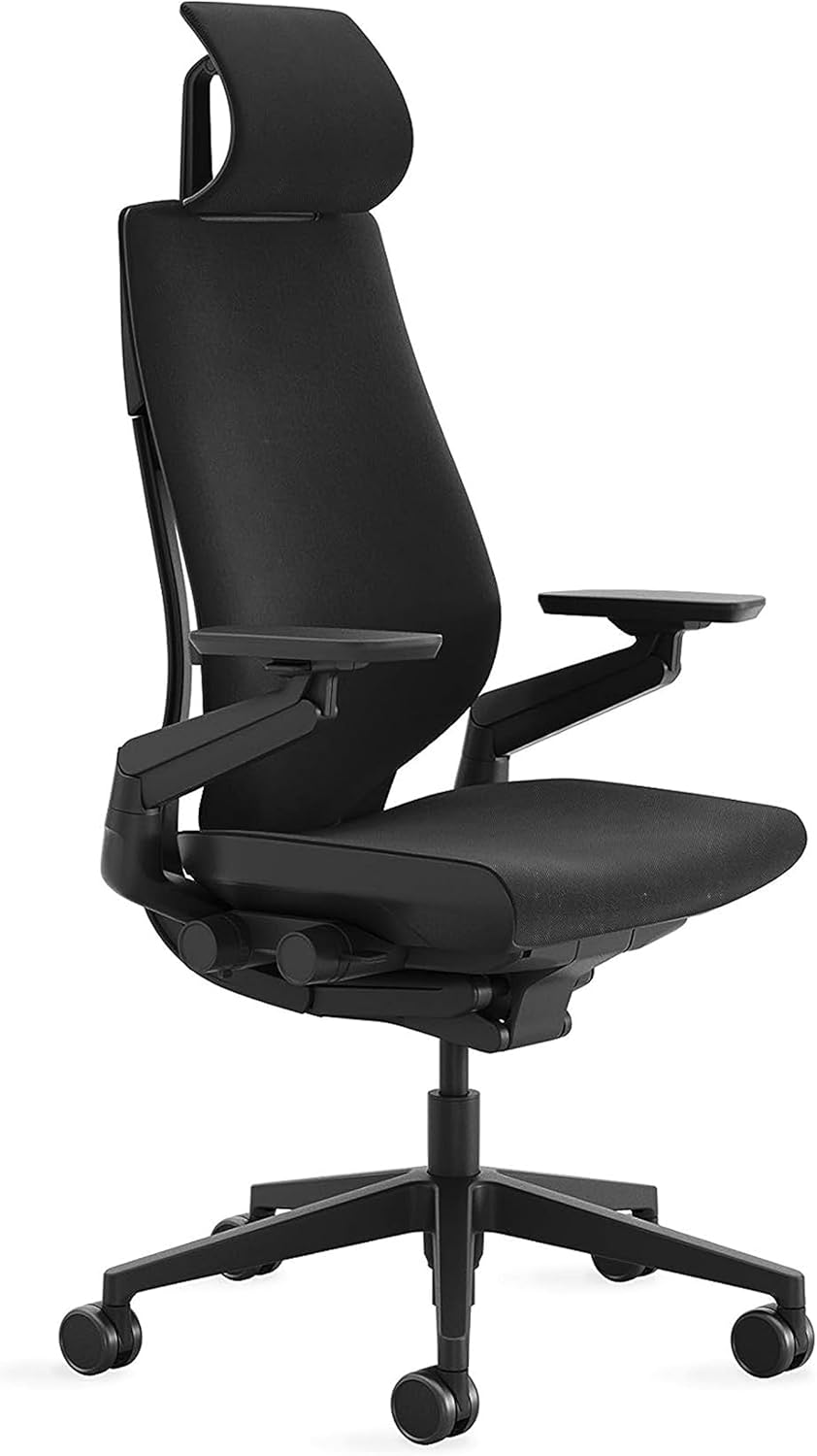 | 1 A task chair Steelcase Gesture + OEM Headrest DEAS 8.6 · seat 19.5″, depth 16″–18″, width 19–20″ What you are sitting on now cannot adjust to you at all. This is the single biggest change available to you. View on Amazon All ranked |
 | 2 Keyboard tray, clamp-on VIVO Large Keyboard Tray MOUNT-KB05E DEAS 6.0 · drops 1″ Drops your keyboard about 1″ so you can sit at your natural height with your feet flat. There is not enough flat underside for a bolt-on, so a clamp-on that grips the front edge is the one to buy. View on Amazon All ranked |
 | 3 A headset Sennheiser EPOS SDW 5064 DEAS 7.2 Cradling a handset bends your neck sideways and holds it there, and that is the one position your neck has no strength in. Two hours a day of it is a lot. You reported neck or shoulder symptoms, and this is one of the few contributors you can remove for under fifty dollars. View on Amazon All ranked |
| | 3 |
Optional, if you want to go further |
Not part of your score. Each one helps the fixes above work harder. |
An ergonomic pillow Therapeutica Orthopedic Sleeping Pillow DEAS 7.2
Waking with neck pain, arm pain or numb hands points at the eight hours you are not at your desk.
- Match the height to how you sleep: side sleepers need enough loft to fill the gap between shoulder and ear, back sleepers a lower pillow with neck support.
- Avoid sleeping on your stomach. It holds your neck turned for hours.
- Keep your wrists straight. Not curled under the pillow, not tucked under your face.
- Give it two to three weeks. If symptoms wake you most nights, or numbness has not cleared an hour after you get up, see a clinician.
View on Amazon All ranked
|
| |
All of this, in writing
Keep this email. Your guides and your numbers are all here for when you shop or set up.
Desk Setup Guide
Your reference for later. When anything changes (a new desk, chair, monitor or job), set up from this, or retake the assessment for a fresh report. Work Recovery Guide
Go to the sections for where you hurt, worst first: Neck (page 5), Upper Back (page 10) and Elbow (page 7). Read Basics (page 3) first for ice vs heat and the signs that mean see a doctor. Exercise Guide
Recommended because you could not do the two-minute plank, the loaded wrist stretch, the neck rotation test or the back scratch test without pain or difficulty. Most days, do the Neck, Shoulder & Elbow routine (page 3) in the morning, the Wrist & Hand routine (page 4) on a break and the Hip, Upper & Lower Back routine (page 5) after work. Neck, Shoulder & Elbow comes first because your neck and upper back already hurt. Each takes 10 minutes. Work Efficiency Guide
You said it has been more than a year since you last cut repetitive work out of your day. Use this to plan it: a week tracking what you do, a week finding what to cut or automate, and a week building the templates and shortcuts. Then repeat it once a year. | | | Seat width | 19–20″ or wider |
| | Chair rated to | 400 lb or more |
| | Desk height, sitting | 25–29″ |
| | Desk height, standing | 44.5″ |
| | Keyboard size | TKL (no number pad), recommended |
| | Mouse size | Small, right-handed |
|
Pick the size that works best for your workflow, but based on your height, a TKL keyboard (no number pad) is recommended.
|
| Already right Sitting back. You use the backrest, which is the whole reason it exists. Depth. Enough room to set your screens at a proper distance. No laptop to worry about. A desktop keeps the screen and the keyboard in separate places, which is the arrangement a laptop can never manage on its own. Your current mouse. You are happy with it, so we have left it alone. The sizes are in your report if you change your mind. Your current keyboard. You are happy with it, so we have left it alone. The size is in your report if you change your mind. Mouse pad. Already covered. Screen height. Top edge at your eye line, which is where your neck wants it. Screen hours. Long, but nothing about your eyes is complaining. Nothing to buy for that. Document stand. Already in place, which is rare. Keep it between the keyboard and the screen rather than off to one side. |
You asked for this report at mydeskdoctor.com. One email — no list, no follow-ups you did not ask for.
Desk Doctor earns a commission on some links, at no cost to you. Rankings are never paid for — every product is scored on the DEAS standard. As an Amazon Associate, Desk Doctor earns from qualifying purchases.
Built from CAESAR anthropometric data, Cornell CUErgo ratios, ANSI/HFES 100-2007 and BIFMA G1-2013. Estimates, not a clinical diagnosis.
Privacy · mydeskdoctor.com |
|
