
Best Ergonomic Mice of 2026
If the side of your hand is going numb by 2pm, or your forearm feels tight after a couple of hours at the desk, the mouse is almost always where I start. A conventional flat mouse forces your forearm into about 85 degrees of pronation — meaning your wrist is rotated almost all the way over, every minute you're working. That sustained position is the single most reliable driver of the wrist and forearm pain I see in my assessment room.
The fix is geometry. A vertical mouse keeps your forearm closer to neutral — the handshake position — and a trackball removes the wrist sweep entirely. What I'm looking for in a clinical review is whether the device actually delivers that neutral position across a real range of hand sizes, and whether the build holds up to eight hours a day for several years.
I evaluated 44 ergonomic mice for this year's guide. After consolidating left- and right-handed variants into single product entries, that's 41 unique devices — and the top 25 are below, ranked by their DEAS composite score. The honest range matters: the best mouse in this list is going to feel weird for a week, the cheapest credible option in this list will probably solve 70% of your symptoms, and a couple of these are listed only so you can see what a conventional mouse looks like next to a true clinical one.
All 25 Ranked
| # | Product | DEAS | Style | Hand Fit |
|---|---|---|---|---|
| 1 | Contour Unimouse | 8.0 | Vertical/lift | small to medium hands |
| 2 | Logitech Lift | 7.7 | Vertical/lift | small to medium hands |
| 3 | Logitech MX Vertical | 7.4 | Vertical/lift | medium to large hands |
| 4 | Evoluent VerticalMouse 4 | 7.1 | Vertical/lift | medium to large hands |
| 5 | Logitech MX Ergo | 7.0 | Trackball | medium to large hands |
| 6 | Logitech MX Ergo S | 7.0 | Trackball | medium to large hands |
| 7 | Logitech Trackman Marble | 7.0 | Trackball | all hand sizes |
| 8 | Kensington Expert Mouse Wireless Trackball | 7.0 | Trackball | all hand sizes |
| 9 | Kensington SlimBlade Trackball | 7.0 | Trackball | all hand sizes |
| 10 | Evoluent VMC Vertical Mouse Wireless | 6.9 | Vertical/lift | medium to large hands |
| 11 | Anker Vertical Ergonomic Mouse Wireless | 6.8 | Vertical/lift | medium hands |
| 12 | Anker Vertical Ergonomic Mouse Wired | 6.8 | Vertical/lift | medium hands |
| 13 | Microsoft Sculpt Ergonomic Mouse | 6.8 | Standard | medium hands |
| 14 | Razer Pro Click V2 Vertical | 6.8 | Vertical/lift | large hands |
| 15 | Evoluent VerticalMouse D | 6.7 | Vertical/lift | medium to large hands |
| 16 | Kensington Orbit Trackball | 6.7 | Trackball | all hand sizes |
| 17 | Kensington MY630 EQ Wireless | 6.7 | Standard | medium hands |
| 18 | Logitech Signature M750 | 6.6 | Standard | small to medium hands |
| 19 | Contour Touch | 6.6 | Standard | all hand sizes |
| 20 | Microsoft Bluetooth Ergonomic Mouse | 6.6 | Standard | small to medium hands |
| 21 | ProtoArc Trackpad | 6.5 | Trackball | all hand sizes |
| 22 | Contour Design Ultimate Workstation RollerMouse Red | 6.4 | Rollermouse | all hand sizes |
| 23 | Logitech M720 Triathlon | 6.3 | Standard | medium hands |
| 24 | Contour RollerMouse Red | 6.3 | Rollermouse | all hand sizes |
| 25 | Microsoft Classic IntelliMouse | 6.3 | Standard | large hands |
Why Your Mouse Is Probably the Cause of Your Wrist Pain
The conventional mouse — the flat oval shape that's been on every desk since 1995 — forces your forearm into roughly 85 degrees of pronation. Pronation is the rotation that turns your palm to face down. Your forearm wasn't built to sustain that for eight hours a day. The two bones in your forearm, the radius and ulna, sit crossed over each other in that position, which compresses the soft tissue between them and tractions the median nerve at the wrist.
The symptoms show up in a predictable order. First it's tightness in the forearm flexors by mid-afternoon. Then it becomes numbness in the thumb and first two fingers — that's the median nerve. Then the side of the hand starts to ache at rest, including evenings and weekends. By the time a patient comes to my office, they've usually been ignoring this for two to four years.
A vertical mouse rotates your forearm back toward neutral — somewhere between 60 and 90 degrees, depending on the model. A trackball removes the entire wrist sweep, which matters most when your wrist is already symptomatic. Both work. The right choice depends on your hand size, what stage of symptoms you're in, and how much learning curve you can tolerate.
Full Reviews — The Top 25
Contour Unimouse

This is the mouse I put on the desks of patients who have already tried two or three vertical mice and still can't find a position that lets their forearm relax. The adjustable hinge means you can dial in your exact angle instead of accepting whatever the manufacturer guessed at — and that's why it sits at the top of this list. Available in left- and right-handed versions.
Pros
- Adjustable hinge — set your own forearm angle
- Six programmable buttons
- Available in left- and right-handed versions
Cons
- No third-party ergonomic certification
- Insufficient long-term Amazon review volume to confirm reliability themes
- Build feels less premium than Logitech at the same price
Logitech Lift

When a patient has a smaller hand and the MX Vertical feels like gripping a coffee mug, this is what I recommend next. The 57-degree angle takes most of the forearm pronation out of the equation, and the size finally fits people who've been told vertical mice aren't for them. Available in left- and right-handed versions.
Pros
- Small-to-medium hand fit — finally accommodates people the MX Vertical doesn't
- Strong Amazon review history
- Available in left- and right-handed versions
Cons
- 57° angle slightly less aggressive than full vertical
- Battery instead of rechargeable
- No third-party certification
Logitech MX Vertical

This is the vertical mouse I hand to patients who want the fix without the learning curve — it works for most adult hands and you'll stop noticing the angle within a week. If you've never used a vertical mouse and you're already feeling forearm tightness by 3pm, start here.
Pros
- Mainstream vertical that fits most adult hands
- Mature product with long reliability track record
- Comfortable transition for new vertical users
Cons
- Large size doesn't suit smaller hands
- No third-party clinical certification
- Standard 2-year warranty — meets but doesn't exceed category
Evoluent VerticalMouse 4

This is the mouse that built the category, and it's still the one I reach for when a patient needs a true 60-degree angle without any compromise to grip the device naturally. The clinical performance is excellent — the trade-off is that the build feels dated next to the Logitech alternatives. Available in left- and right-handed versions.
Pros
- True 60-degree angle — purest vertical geometry in the lineup
- Long clinical history in the category
- Available in left- and right-handed versions
Cons
- Build quality dated vs. Logitech competitors
- Driver software optional but inconsistent on macOS
- Price at category benchmark with no premium build
Logitech MX Ergo

If your forearm pain is real but you can't give up the muscle memory of moving your whole hand, the thumb trackball is the bridge. Your wrist stops sweeping side to side, which is the single biggest thing you can change if you're already feeling that ache from elbow to pinky.
Pros
- Thumb-driven ball eliminates wrist sweeping motion
- Tilt-adjustable base — small angle change, real biomechanical impact
- Logitech Flow multi-device support
Cons
- Thumb-driven trackballs have a 1–2 week adjustment period
- Not a true vertical — body still in pronated position
- Price 25% above mouse category benchmark
Logitech MX Ergo S

This is the same chassis as the original MX Ergo with a quieter click and a refresh — if you're choosing between the two, the price usually decides it. I tell patients the rule: get whichever one is on sale, because clinically they're identical.
Pros
- Quieter click than original MX Ergo
- Same proven thumb-trackball geometry
- Updated USB-C charging
Cons
- Functionally identical to original MX Ergo — no clinical reason to pick this over a cheaper Ergo
- Trackball balls collect oil and need periodic cleaning
- Above-benchmark pricing without proportional clinical gain
Logitech Trackman Marble
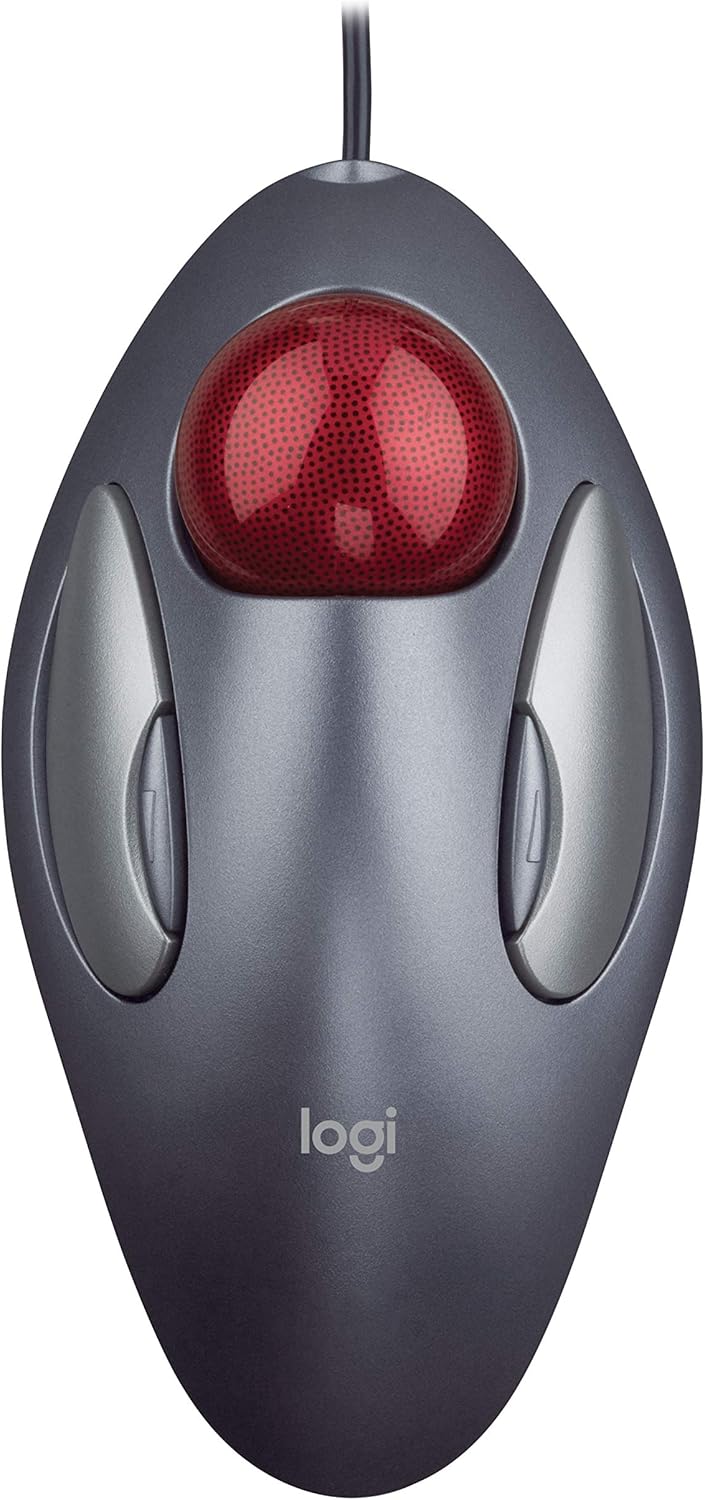
I send patients here when their wrist is already symptomatic and they need to stop moving it entirely for a few weeks. The ambidextrous shape and finger-operated ball mean your wrist sits still — and that's the whole point during a flare.
Pros
- Ambidextrous — eliminates handedness as a variable
- Finger-driven ball keeps wrist stationary
- Very durable across long product lifespan
Cons
- No tilt adjustment — fixed flat position
- Older design, no rechargeable battery
- Marble surface attracts dust
Kensington Expert Mouse Wireless Trackball

This is the trackball I recommend for patients with mid-stage carpal tunnel symptoms who need to control a large monitor or multiple displays without recruiting wrist motion at all. The large ball is the most accurate finger-driven option I've tested.
Pros
- Largest ball in the lineup — finest motor control
- Wired and wireless options
- Excellent for mid-stage CTS where wrist motion must stop
Cons
- Footprint takes desk real estate
- Software (KensingtonWorks) sometimes inconsistent on macOS
- No tilt adjustability
Kensington SlimBlade Trackball

If your hand is on the larger side and the Expert Mouse feels cramped, this is the equivalent for you — same finger-driven concept, slightly different geometry. Functionally interchangeable with the Expert at the clinical level.
Pros
- Same finger-driven approach as Expert Mouse with different chassis
- Suits slightly larger hand than the Expert
- Strong Amazon reliability signal
Cons
- Functionally interchangeable with Expert Mouse — no clinical reason to pick one over the other except shape fit
- Same software inconsistencies as other Kensington models
- Premium positioning relative to category benchmark
Evoluent VMC Vertical Mouse Wireless

This is the wireless update to the long-running Evoluent line, and the clinical geometry is everything that made the original VerticalMouse 4 work. If you already know vertical fits your hand and you just want it untethered, this is the pick.
Pros
- Pure vertical geometry from the established Evoluent line
- Wireless freedom of the original 4 design
- Same 60-degree clinical angle
Cons
- Insufficient Amazon review volume to verify long-term reliability
- Right-handed only at launch
- Build feels dated vs. Logitech wireless verticals
Anker Vertical Ergonomic Mouse Wireless

When a patient tells me they can't justify $100 on a mouse just to find out vertical doesn't work for them, this is what I send them to try first. It does 80% of what the MX Vertical does for a fraction of the cost — a perfectly reasonable place to start the experiment.
Pros
- Strongest value in the vertical category — under $30 typically
- Real 90-degree handshake grip
- Reasonable Amazon track record
Cons
- Build is what you'd expect at the price
- No third-party certification
- Tracking less precise than premium verticals
Anker Vertical Ergonomic Mouse Wired
Same shape as the wireless Anker, with a cord — and if you're already at a fixed workstation, the wire is a non-issue. Functionally identical to the wireless version at the clinical level; pick whichever fits your desk setup.
Pros
- Cheapest credible way to test a vertical mouse
- Same biomechanical angle as the wireless Anker
- No batteries — plug and use
Cons
- Wired-only — restricts placement
- Plastic construction feels light
- Below-average tracking precision vs. premium verticals
Microsoft Sculpt Ergonomic Mouse

I still see this on patient desks years after Microsoft stopped marketing it, because the BlueTrack sensor and curved profile work for hands that hate fully vertical mice. It's a soft on-ramp to ergonomic geometry without forcing the handshake grip.
Pros
- Curved profile is gentler than full vertical — good for patients who've rejected verticals
- Long-running reliability track record
- Familiar mouse shape — no learning curve
Cons
- Microsoft has discontinued direct support
- Not a true vertical position
- Stock availability has become inconsistent
Razer Pro Click V2 Vertical

Razer made a competent vertical mouse and it is clinically equivalent to the Logitech MX Vertical in every meaningful way — the price is what tells you whether to pick this or the Logitech. If you're already in the Razer ecosystem and want the software unification, this is reasonable.
Pros
- Clinically equivalent to MX Vertical at the geometry level
- Razer Synapse software integration
- Programmable buttons
Cons
- Pricing significantly above category benchmark for what it delivers clinically
- Razer software install required for full feature use
- Value ratio is among the weakest in the top 25
Evoluent VerticalMouse D

The premium build of the Evoluent line — heavier, more refined feel, same 60-degree clinical angle as the 4. The reason this sits below the 4 on the list is straight pricing: the clinical performance doesn't change at the higher tier, but the value ratio does.
Pros
- Heavier, more premium feel than VerticalMouse 4
- Same 60-degree clinical angle
- Driverless plug-and-play on Windows and macOS
Cons
- Value ratio drops vs. the 4 — same clinical performance, higher price
- Build improvements are tactile, not clinical
- Insufficient long-term review volume to confirm reliability vs. the 4
Kensington Orbit Trackball

The trackball I recommend when a patient wants to move from a regular mouse to finger-driven control without the learning curve of a billiard-ball-sized trackball. Small ball, thumb operation, ambidextrous — the gentlest possible introduction.
Pros
- Easiest trackball learning curve
- Thumb-driven small ball — natural transition
- Compact desktop footprint
Cons
- Less precise than full-size trackballs
- No tilt adjustment
- Older design, no rechargeable battery
Kensington MY630 EQ Wireless

A solid mid-tier vertical-profile mouse at a fair price. The angle isn't as aggressive as a true vertical, which makes it easier to learn but means it does less to fix forearm pronation. A reasonable middle option for patients who've rejected the Anker and balked at the MX Vertical.
Pros
- Mid-tier price for vertical-profile geometry
- Solid construction
- Good Amazon value signal
Cons
- Angle is gentler than a true vertical — does less for established forearm symptoms
- Brand recognition lower than Logitech/Evoluent in this category
- Software ecosystem less mature
Logitech Signature M750

I keep this on the list because it's the everyday wireless mouse that most desks already have — and it's the one I quietly tell patients to throw away if their wrist hurts. It's listed here only so readers can see what a conventional mouse looks like next to a true ergonomic one.
Pros
- Listed for completeness — this is what most desks already have
- Strong Amazon reliability data
- Quiet click
Cons
- Conventional small-hand mouse geometry — does not address forearm pronation
- Listed only to show the contrast with verticals
- Not recommended for any patient already experiencing wrist or forearm symptoms
Contour Touch
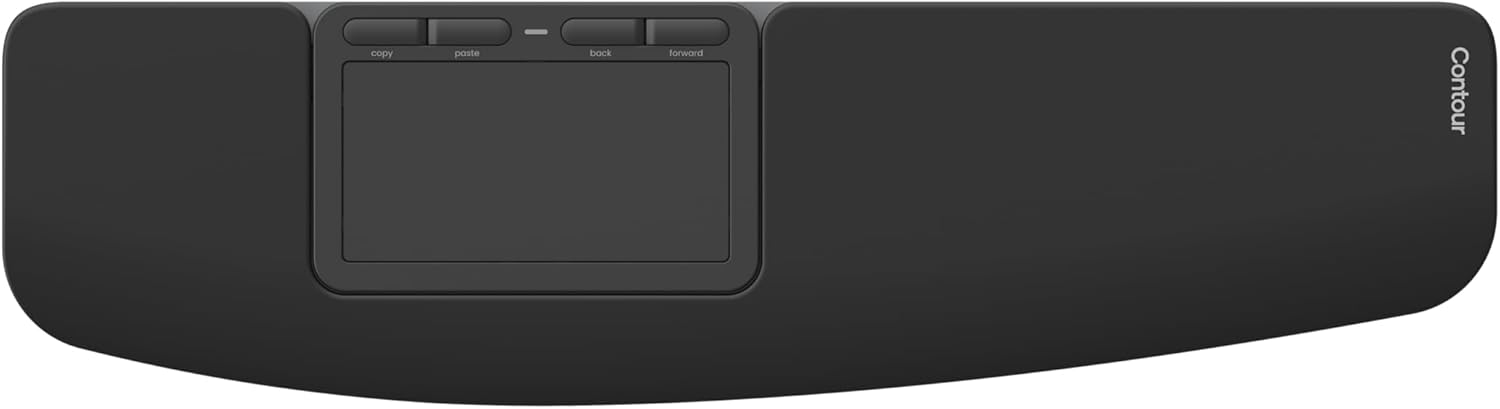
Contour's bluetooth touch surface is the alternative I recommend for patients who want trackpad-style gesture input without giving up the desk footprint of a mouse. The clinical performance is solid for an ambidextrous device; you trade some precision for the no-wrist-sweep benefit.
Pros
- Touch surface removes the click-and-drag wrist motion
- Ambidextrous
- Bluetooth pairing across devices
Cons
- Touch input takes 1–2 weeks to feel precise
- Pricing puts it well above the category benchmark
- Insufficient certification or warranty signals to elevate above mid-tier
Microsoft Bluetooth Ergonomic Mouse
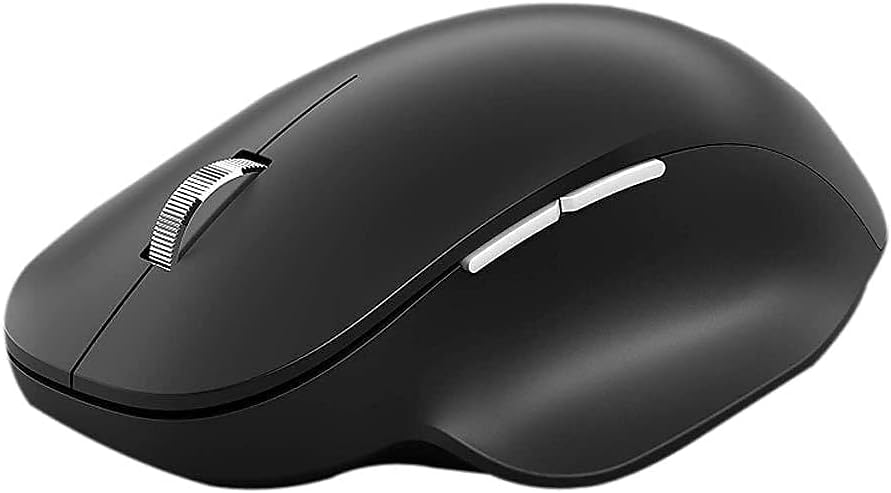
A curved everyday mouse that fits smaller hands. Better than a flat conventional mouse for the average user but a long way short of any vertical. Acceptable as a prevention-tier option if you have no symptoms yet.
Pros
- Curved small-hand shell better than fully flat mice
- Strong Amazon reliability signal
- Reasonable price
Cons
- Curve is cosmetic — does not deliver vertical forearm position
- Not a clinical solution for existing symptoms
- Best treated as a prevention-tier option for asymptomatic users
ProtoArc Trackpad

The most credible standalone trackpad for desktop work. The reason it ranks where it does isn't the device — it's that trackpad gestures require finger precision the wrist doesn't typically have to deliver, which is good for people coming back from injury. Not a first recommendation for prevention; a strong option if your hand is already symptomatic.
Pros
- Gesture-based input removes traditional click-drag wrist motion
- Ambidextrous
- Useful for patients recovering from a wrist procedure
Cons
- Trackpad gesture learning curve is real for desktop users
- No tilt or angle adjustment
- Not a prevention-tier recommendation
Contour Design Ultimate Workstation RollerMouse Red

This is the mouse alternative I install for patients who have been to two surgeons about their wrist and still need to work eight hours a day. You don't grip it — you slide a bar in front of your keyboard, which removes the reach to the mouse entirely. The clinical performance is unrivaled; the only reason it isn't ranked higher is the price.
Pros
- Eliminates the reach to the mouse entirely — bar sits in front of the keyboard
- Used in clinical hand-rehabilitation settings
- Highest Layer I scores in the lineup
Cons
- Price is roughly 5x the category benchmark — value ratio is the weakest in the list
- Requires a keyboard tray or specific desk depth
- Steep adjustment period (1–3 weeks)
Logitech M720 Triathlon

A multi-device standard mouse that pairs to three computers at once. Listed here only because it's a common request — clinically, this delivers nothing a curved Microsoft would not. If your wrist hurts, this won't help.
Pros
- Multi-device switching across three computers
- Strong Amazon reliability
- Battery lasts roughly 24 months
Cons
- Conventional mouse geometry — does not address forearm pronation
- Listed only because it's commonly requested
- Not a clinical recommendation for any patient with existing symptoms
Contour RollerMouse Red
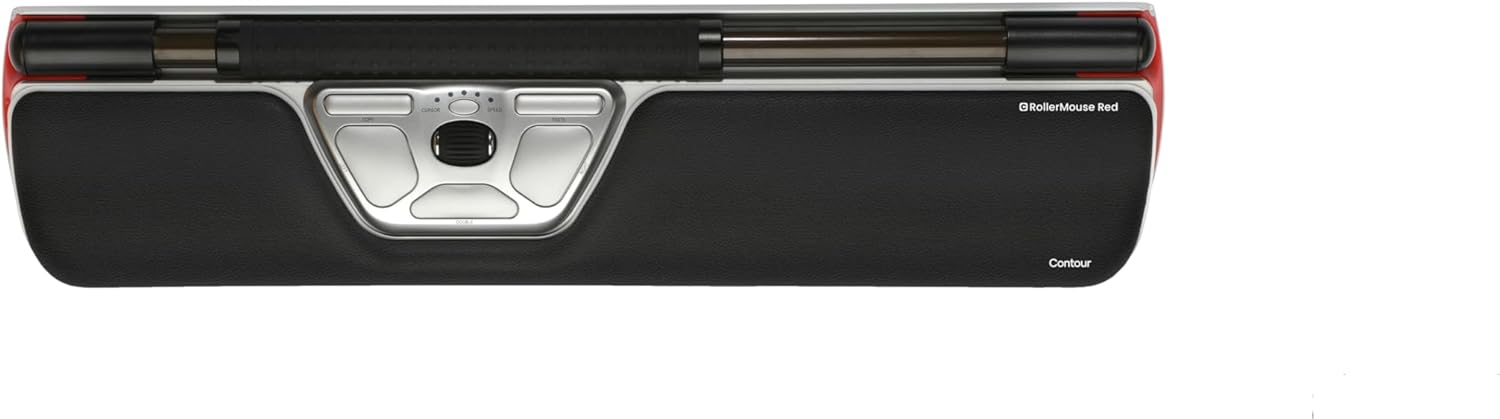
The earlier-generation RollerMouse Red. The newer Ultimate Workstation edition adds programmable buttons and updated firmware; pick this one only if you've found it on sale below the Ultimate. Clinically equivalent at the bar-and-keyboard concept.
Pros
- Same clinical bar-and-keyboard concept as the Ultimate Workstation
- Slightly cheaper than the Ultimate
- Used in clinical settings
Cons
- Older firmware and fewer programmable buttons than the Ultimate Workstation
- Value ratio remains weak — still priced far above category benchmark
- Same adjustment period as any rollermouse (1–3 weeks)
Microsoft Classic IntelliMouse

Microsoft's reissue of the original IntelliMouse from the late 1990s. A large, right-handed conventional mouse with no ergonomic geometry, included in this list specifically because patients keep bringing it in asking whether the curved version helps. It doesn't.
Pros
- Large right-handed shell suits larger hands
- Reliable BlueTrack sensor
- Familiar legacy shape
Cons
- Pure conventional mouse — no ergonomic geometry whatsoever
- Right-handed only
- Not a recommendation for any patient with wrist or forearm symptoms
- Position the mouse next to the keyboard, not in front of it. Your elbow should hang at your side, not reach forward. If you're reaching, your shoulder will pay the bill within a week.
- Keep your forearm fully supported by the desk or armrest. An unsupported forearm forces your trapezius to hold the weight, which is how mouse-related neck pain starts.
- Set the mouse so your wrist is flat — not bent up, not bent down. A folded towel under the heel of your hand can correct upward bend in two minutes.
- Increase your pointer speed in system settings. Higher sensitivity means smaller movements, which means less wrist sweep across a workday.
- Switch hands once a week if you can. Even thirty minutes a day with the non-dominant hand redistributes load and protects the dominant side from chronic overuse.
- Stop death-gripping the mouse. If your knuckles are white you're recruiting forearm muscles you don't need — a deliberate light touch costs you nothing and saves the flexors.
- Take a 30-second hand break every 30 minutes. Set a timer. Open the hand fully, then make a fist, three times. This is the cheapest single thing you can do for your wrist.
Carpal Tunnel Symptoms
Numbness or tingling in the thumb and first two fingers, especially at night. Hand sometimes feels weak when gripping.
What helps: Move to a trackball during a flare to stop wrist sweeping motion. Long-term, vertical mouse plus wrist-neutral setup.
Forearm Tightness
Aching or tight feeling from the elbow down to the pinky side of the hand, usually worse by mid-afternoon. Feels relieved by stretching the wrist back.
What helps: Vertical mouse to reduce pronation load. Light grip pressure on the device. Hourly 30-second hand opens.
Mouse-Shoulder Pain
Dull ache in the shoulder of your mousing arm. Pain on the side of the neck. Worse after a long meeting day.
What helps: Pull the mouse closer to your body so your elbow stays at your side. Support the forearm. Switch hands when possible.
What should I look for when buying an ergonomic mouse?
Three things, in this order. First, geometry — does it rotate your forearm toward neutral? A true vertical mouse should put your hand somewhere between 60 and 90 degrees of vertical, not just curve a conventional shape upward. Second, fit — measure your hand from wrist crease to the tip of the middle finger and match it to the manufacturer's sizing chart, because a vertical mouse that's too big or too small is worse than a flat mouse that fits. Third, the right tool for your symptom stage — if your wrist is already sore at rest, a trackball will give it the break it needs while you address the underlying setup; if you're catching the problem early, a well-fitted vertical mouse will usually be enough.
How many mice were reviewed for this guide?
I evaluated 44 ergonomic mice against the DEAS framework for this year's update. After consolidating left- and right-handed variants into single product entries — three products in this guide ship in both versions — that's 41 unique devices. The top 25 are reviewed in full above; the remaining 16 are listed in the question below with their composite scores. A product scoring below the DeskDoctor Recommended threshold (7.0) doesn't fail outright — it just means the clinical performance, build, or value isn't strong enough to be a first recommendation.
I'm left-handed — which of these mice come in a left-handed version?
Three of the products in this guide ship in dedicated left-handed variants with separate purchase listings: the Logitech Lift and the Evoluent VerticalMouse 4. The Contour Unimouse is also sold in left- and right-handed configurations, though Amazon currently lists both under a single SKU. Several other vertical mice — the Evoluent VMC, Evoluent VerticalMouse D, Anker Wireless and Wired, Razer Pro Click V2, and Microsoft Sculpt — are right-handed only at the time of publication. The remaining ergonomic alternatives in this guide are fully ambidextrous and work the same in either hand: the Logitech Trackman Marble, Kensington Expert Mouse, Kensington SlimBlade, Kensington Orbit, Contour Touch, ProtoArc Trackpad, and both Contour RollerMouse models. If you're left-handed, do not buy a right-handed vertical mouse and try to use it backwards — the geometry is engineered for a specific hand, and using it on the wrong side reintroduces every problem you were trying to solve.
What hand size do these mice fit?
Measure from your wrist crease to the tip of your middle finger. Under 6.5 inches is generally a small hand; 6.5–7.5 inches is medium; over 7.5 inches is large. For small hands, the Logitech Lift, Logitech Signature M750, and Microsoft Bluetooth Ergonomic Mouse fit best. For medium hands, the Anker Wireless, Microsoft Sculpt, and Kensington MY630 are well-sized. For large hands, the MX Vertical, Evoluent VerticalMouse 4, and Razer Pro Click V2 give you the room. Trackballs and rollermouses are mostly hand-size-agnostic.
What about the other mice that were reviewed but didn't make the top 25?
These ranked 26–41 in the DEAS evaluation. Most are conventional mice with curved shells (which doesn't change forearm pronation enough to count as ergonomic) or gaming mice that were tested because they're commonly used on desks but aren't built for sustained office work:
- Logitech M510 — DEAS 6.2 (Standard)
- Logitech MX Master 3S — DEAS 6.1 (Standard)
- Logitech M705 Marathon — DEAS 6.1 (Standard)
- Adesso iMouse E10 — DEAS 6.1 (Vertical/lift)
- Razer Pro Click — DEAS 6.1 (Standard)
- Acer Wireless Vertical Ergonomic Mouse — DEAS 6.0 (Vertical/lift)
- Incase Bluetooth Ergonomic Mouse — DEAS 6.0 (Standard)
- Adesso iMouse E50 — DEAS 5.9 (Vertical/lift)
- Adesso iMouse X1 — DEAS 5.9 (Standard)
- Razer Pro Click Mini — DEAS 5.9 (Standard)
- Logitech G Pro Wireless — DEAS 5.9 (Standard)
- Logitech MX Anywhere 2S — DEAS 5.7 (Standard)
- Logitech G502 X Lightspeed — DEAS 5.6 (Standard)
- Logitech G Pro X Superlight — DEAS 5.6 (Standard)
- SteelSeries Aerox 5 Wireless — DEAS 5.6 (Standard)
- Razer Naga V2 HyperSpeed — DEAS 5.4 (Standard)
Is a vertical mouse or a trackball better for wrist pain?
Both work, and they solve slightly different problems. A vertical mouse keeps your forearm in a more neutral rotation but you still move your wrist to control the cursor — good for prevention and early-stage symptoms. A trackball removes the wrist motion entirely because your fingers or thumb operate the ball while the wrist stays still — what I recommend during an active flare-up or for anyone with diagnosed carpal tunnel. Some patients end up using a vertical mouse most days and a trackball on heavy spreadsheet days.
How long does it take to adjust to an ergonomic mouse?
Vertical mice: about a week to feel natural, two weeks before your speed matches what it was with a conventional mouse. Trackballs: longer — usually two to three weeks for a full-size trackball, less for a thumb-driven one. Rollermouses and trackpads: two to three weeks. The first few days will feel awkward and that's expected. If you're still struggling after three weeks, the device is probably wrong for your hand size, not wrong as a concept.
Do I need a wrist rest with an ergonomic mouse?
Not usually. A traditional wrist rest at the mouse compresses the soft tissue at the carpal tunnel — the exact opposite of what you want. What you do need is something that supports your forearm, either an armrest or the desk surface itself, so the weight of your arm isn't held up by your shoulder. The wrist itself should float, not rest on a gel pad.
Affiliate disclosure: DeskDoctor is a participant in the Amazon Services LLC Associates Program and other affiliate programs. Some links on this page are affiliate links — if you purchase through them, we earn a commission at no cost to you. Affiliate relationships do not influence our DEAS evaluations or product rankings; products are scored against the same framework regardless of whether an affiliate link exists.
Clinical disclaimer: This article is for educational purposes only and does not constitute medical advice. AJ Prince, HEAS is a certified ergonomic assessment specialist, not a physician. If you are experiencing persistent pain, numbness, tingling, or loss of function in any part of your hand, wrist, forearm, or shoulder, consult a qualified healthcare provider. Ergonomic equipment is one part of a broader strategy that may include rest, stretching, strengthening, posture correction, and in some cases medical or surgical intervention.
0 Comments