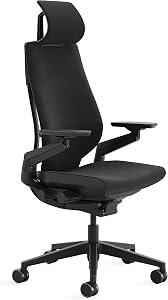
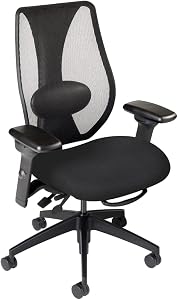
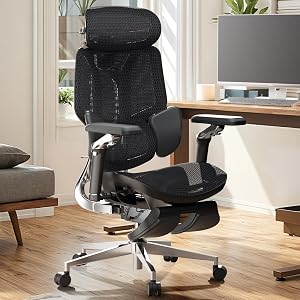
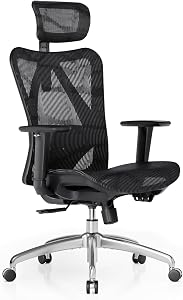
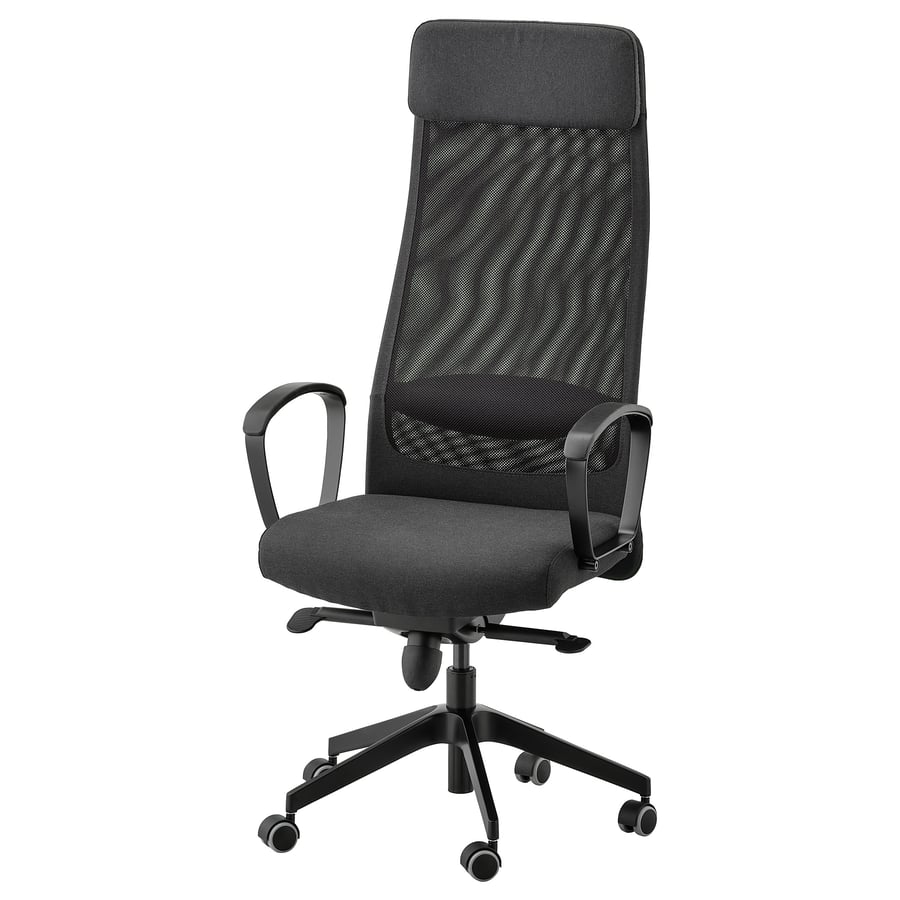
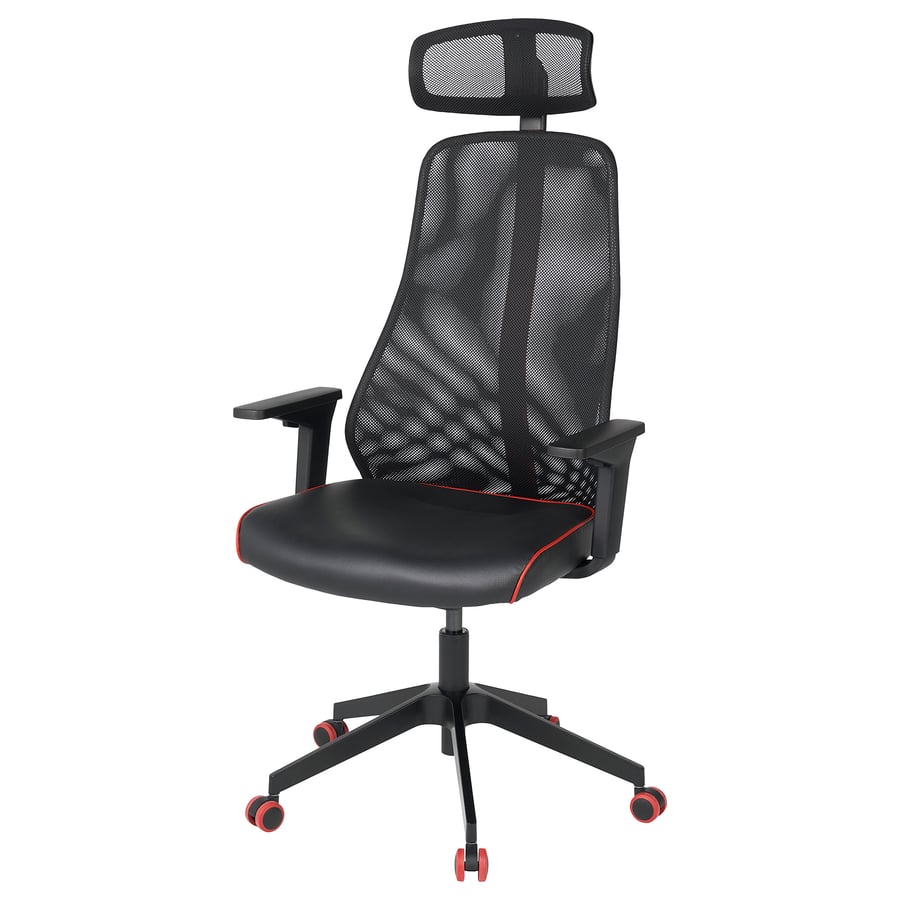
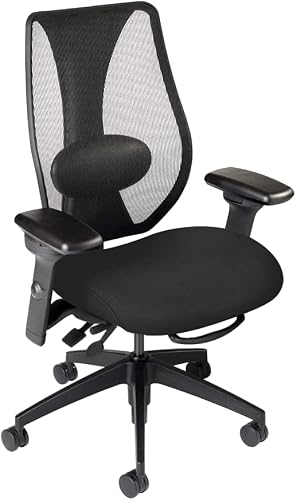
Short answer: the Steelcase Gesture, the Herman Miller Aeron and the Herman Miller Embody share the top score of the chairs we’ve scored, and the Steelcase Amia is the best value in the top ten. Which one fits you depends on your height, desk and weight: enter them below and the finder picks yours.
Not sure which one fits you? Use the fit finder above: it checks every one against your body in under a minute.
The ranking
Best to worst by DEAS score. After you use the finder, this list keeps only the chairs that can be set to your body and your desk; the headrest filter narrows it further.
#ProductDEAS
1Herman Miller Aeron Size ASeat height 14.8–19″8.6DEAS
Your height sets the seat. The height of the seat should match the distance from the floor to the back of your knee, which runs about a quarter of your height, and the seat depth runs about the same share. These are the ratios the Desk Doctor assessment uses, from Cornell’s CUErgo and OSHA’s computer workstation guidance.
Your desk can move that number. A desk above your seated elbow height means raising the seat to meet it, so the chair has to go higher and your feet need a footrest; the finder tells you how high to set one. Your weight sets the minimum rating, your build sets the minimum seat width, and moderate neck pain most days (or any severe neck pain) adds a headrest.
The pick is the highest DEAS score that meets every one of those numbers. Fit comes before price: if nothing that fits is in your budget, the finder says so and shows the lowest-priced fit. If nothing meets every number at any price, you get the closest chair and exactly what it misses.
What makes a chair ergonomic
The chair is the one piece of equipment that holds your spine all day. When its geometry is wrong, your body works around it, and the workarounds are what I see in assessments: an ache above the belt line by mid-morning, thighs that go numb, shoulders creeping up toward the ears.
Most chairs sold as ergonomic fail in the same places. The lumbar support is a fixed bump at the wrong height, the seat is too deep for shorter thighs, and the armrests won't come low or close enough to let your shoulders drop. What you want is lumbar support that moves to the small of your back, a seat height and depth that fit your legs, armrests that go where your arms are, and a recline you'll actually use.
Of the 62 chairs I scored, three tie at the top, and the Steelcase Gesture is the one I'd put most people in. If your budget stops lower, see the best chairs under $500 and under $300.
Four things, and OSHA's chair guidance covers each one: a backrest that fits the small of your back, with lumbar support you can move up and down; a seat height that lets your feet rest flat, and a seat that supports most of your thigh without touching the back of your knee; armrests low enough for your shoulders to relax and close enough to keep your upper arms by your sides; and a backrest that reclines at least 15 degrees.1
What the research says
In a computer model of the lumbar spine, upright sitting loaded the discs about the same as standing, while slumped sitting raised the pressure on them significantly; the authors' advice was to keep the lumbar curve while seated.2 In a lab study, a lumbar support pillow kept the lower back slightly closer to neutral and cut fidgeting on the seat, although the changes were small and people didn't report feeling more comfortable.3 The support helps most where your curve is, which is why OSHA asks for lumbar support that adjusts in height.1
What that means when you shop
Buy the adjustments your body needs, then set them. A great chair set up wrong still hurts; the setup below takes about ten minutes.
Full reviews
1 of 10. Best mesh chair
Herman Miller Aeron
DEAS 8.6 out of 10
Three sizes (A, B, C); mesh seat and back; PostureFit SL back support. Size B: seat 16 to 20.5 inches high, 17 deep, rated to 350 lb. BIFMA level 3; 12-year warranty.
The Aeron's answer to fit is size: it comes in three, so you buy a chair built for your frame instead of adjusting one around it. The mesh seat and back stay cool, and the PostureFit SL backrest supports the base of your spine as well as your lower back. It ties for our top score; the price is the trade-off.
Good: three sizes; a mesh seat and back that stay cool; support for the base of the spine as well as the lower back; the top build score here; a 12-year warranty. Less good: priced far above the category benchmark; the seat depth doesn't adjust, the size sets it; no headrest from Herman Miller.
Composite 8.6 on the DEAS (Desk Ergonomics Assessment Score). How we score
2 of 10. Best backrest
Herman Miller Embody
DEAS 8.6 out of 10
A back made of a flexing matrix of small supports; seat 16 to 20.5 inches high, depth 15 to 18; rated to 300 lb. BIFMA level 3; 12-year warranty.
The Embody's back is a matrix of small supports that flex on their own, so it moves with you as you shift instead of holding you in one shape. Herman Miller designed it with advice from more than 30 physicians and PhDs. It shares our top score, with the best neutral-posture score of any chair we've rated.
Good: a back that moves with you; the best neutral-posture score of any chair we've scored; adjustable seat depth; a 12-year warranty. Less good: priced far above the category benchmark; rated to 300 lb, less than the Steelcase chairs here; no forward seat tilt.
Composite 8.6 on the DEAS (Desk Ergonomics Assessment Score). How we score
3 of 10. Best overall
Steelcase Gesture
DEAS 8.6 out of 10
Armrests that pivot through 360 degrees; seat 16.3 to 21.5 inches high, depth 15.75 to 18.75; rated to 400 lb. BIFMA level 3; 12-year multi-shift warranty.
The chair I'd put most people in. Its armrests go wherever your arms go, including in toward your body when you're on a phone or tablet, so your shoulders can stay down. It ties for our top score with the widest adjustment range of any chair we've rated, and it's rated to 400 pounds. Adjustable lumbar is an option; add it.
Good: arms that move in every direction; the widest adjustment range of any chair we've scored; rated to 400 lb; a 12-year multi-shift warranty. Less good: priced far above the category benchmark; adjustable lumbar costs extra.
Composite 8.6 on the DEAS (Desk Ergonomics Assessment Score). How we score
4 of 10. Strong all-rounder
Haworth Fern
DEAS 8.2 out of 10
A flexible back built on a central stem, with Wave Suspension; seat 16.5 to 21 inches high, depth 15.5 to 18.5; rated to 350 lb (325 with forward tilt). BIFMA, GREENGUARD Gold; 12-year warranty.
The Fern's back is built around a central stem, with flexible fronds that give where your back moves. It scores just behind the three leaders, with the second-widest adjustment range here, and Haworth's 12-year warranty matches the Aeron's.
Good: a back that gives where you move; the second-widest adjustment range here; GREENGUARD Gold; a 12-year warranty (fabric 3 years). Less good: priced well above the category benchmark; a headrest only on the Executive version; rated to 325 lb with forward tilt.
Composite 8.2 on the DEAS (Desk Ergonomics Assessment Score). How we score
5 of 10. Best for reclining at work
Steelcase Leap V2
DEAS 8.1 out of 10
LiveBack backrest that changes shape as you move; seat slides forward and back; seat 15.5 to 20.5 inches high; rated to 400 lb. BIFMA level 2; 12-year multi-shift warranty.
Its backrest flexes to follow your spine as you move and keeps contact with your lower back as you recline, so if you lean back to read or think, this is the one. It also starts lower than most premium chairs, at 15.5 inches, which helps shorter people get their feet flat.
Good: a back that keeps contact as you recline; one of the lowest seats here; rated to 400 lb; a 12-year multi-shift warranty. Less good: priced well above the category benchmark; Steelcase's warranty covers only the first owner, so a refurbished one is covered by the seller's.
Composite 8.1 on the DEAS (Desk Ergonomics Assessment Score). How we score
6 of 10. Best-value Herman Miller
Herman Miller Mirra 2
DEAS 8.0 out of 10
Butterfly back: a fabric layer over flexible polymer; optional lumbar that adjusts 4.5 inches in height; seat 16 to 20.5 inches high; rated to 350 lb. 12-year warranty.
Herman Miller's build and warranty with a better price score than the Aeron or Embody. The Butterfly back pairs a fabric layer with flexible polymer, and the optional lumbar adjusts in height and depth. Order that option, and the FlexFront seat if you have longer thighs.
Good: Herman Miller build; a better price score than its siblings; optional lumbar that adjusts in height and depth; a 12-year warranty. Less good: adjustable lumbar and seat depth are options, not standard; still priced well above the category benchmark.
Composite 8.0 on the DEAS (Desk Ergonomics Assessment Score). How we score
7 of 10. Simplest to adjust
Humanscale Freedom
DEAS 8.0 out of 10
Weight-sensitive recline with no tension knob; backrest height adjusts; rated 100 to 300 lb. GREENGUARD Gold; 15-year warranty.
No recline knobs or locks: the Freedom's recline responds to your weight, so you sit, lean back and it holds you. For people who never touch the levers on their chair, that's the point. Humanscale says it fits people from 5'0" to 6'4", and there's a version with a headrest.
Good: nothing to set for the recline; GREENGUARD Gold; a headrest version; a 15-year warranty (upholstery 5 years). Less good: rated to 300 lb; less adjustment range than the Gesture; priced well above the category benchmark.
Composite 8.0 on the DEAS (Desk Ergonomics Assessment Score). How we score
8 of 10. Most configurable
ergoCentric tCentric Hybrid
DEAS 8.0 out of 10
Built to order: six seat sizes, four tilt mechanisms, arm, lumbar and headrest options. Standard seat 15 to 23 inches high, depth 16 to 19. GREENGUARD Gold; lifetime warranty for the first owner.
The chair to buy when you want it built around your body: you choose the seat size, the tilt mechanism, the arms and the lumbar. It's the chair I see most in workplace accommodation orders, and its seat range, 15 to 23 inches, covers very short and very tall people. Made in Canada.
Good: the widest seat height range here; six seat sizes; GREENGUARD Gold; a lifetime warranty for the first owner. Less good: ordering takes care, ideally with a dealer's help; the weight rating depends on the seat you order, so check it; priced far above the category benchmark.
Composite 8.0 on the DEAS (Desk Ergonomics Assessment Score). How we score
9 of 10. Best value in the top 10
Steelcase Amia
DEAS 7.9 out of 10
LiveLumbar: flexible lumbar you slide to your height; seat 15.5 to 20.5 inches high; rated to 400 lb. BIFMA level 3; 12-year multi-shift warranty.
The best price score of these ten, with Steelcase's build and warranty and a 400-pound rating. Its LiveLumbar is a set of flexors you slide to the small of your back with two handles, so the support sits where your curve is.
Good: the best price score of the top ten; rated to 400 lb; lumbar support you set to your height; a 12-year warranty. Less good: the lumbar doesn't move on its own, so set it; still priced above the category benchmark.
Composite 7.9 on the DEAS (Desk Ergonomics Assessment Score). How we score
10 of 10. Lumbar that adjusts side to side
Haworth Zody
DEAS 7.9 out of 10
Pelvic and Asymmetrical Lumbar: each side adjusts separately; seat 16 to 21 inches high; rated to 350 lb (325 with forward tilt). BIFMA, GREENGUARD Gold; 12-year warranty.
The only chair here that lets you set the lumbar support differently on each side. If your lower back always aches more on one side, that's worth trying. The rest is a well-built task chair with the second-best price score of the ten.
Good: lumbar you can set separately on each side; the second-best price score of the top ten; GREENGUARD Gold; a 12-year warranty. Less good: rated to 350 lb (325 with forward tilt), below the Steelcase chairs; more adjustments to learn than most.
Composite 7.9 on the DEAS (Desk Ergonomics Assessment Score). How we score
How to set up your chair
1
Set the seat height for your desk. Sit all the way back and raise or lower the seat until your elbows are level with the desk or keyboard.
2
Plant your feet. If they don't rest flat at that height, add a footrest rather than lowering the seat.1
3
Set the seat depth. Leave about two to three inches between the front edge of the seat and the back of your knees. The seat should hold most of your thigh without touching the back of your knee.1
4
Place the lumbar support. In the small of your back, around belt level. It should feel like a gentle push, not pressure.1
5
Set the armrests. Low enough that your shoulders relax, close enough that your upper arms stay by your sides. If they get in the way, lower them or take them off.1
6
Unlock the recline. Set the tension so the chair follows you back without throwing you. Leaning back a little lets the backrest carry some of your weight.
7
Get up every 30 to 45 minutes. No chair removes the need to move.
Clinical note
A chair that fits feels unremarkable by the end of the day. If you notice pressure points, a tight lower back or hunched shoulders, something in the setup is off; start with the armrests.
Which chair pain are you solving?
A dull ache above the belt line
Feels like
Builds by mid-morning and eases when you stand up.
What helps
Lumbar support set to the small of your back, or a back that moves with you, like the Embody or Leap V2.
Numb or heavy thighs
Feels like
Pressure under the thighs or behind the knees after a couple of hours.
What helps
Shorten the seat depth, check the seat height, and add a footrest if your feet don't rest flat.
Tight neck and shoulders
Feels like
Across the base of the skull and the tops of the shoulders, worse by the afternoon.
What helps
Lower the armrests until your shoulders drop and bring them in close, then check the height of your screen.
Common questions
What is the best ergonomic chair?
The Steelcase Gesture, Herman Miller Aeron and Herman Miller Embody tie at DEAS 8.6; the Steelcase Amia (7.9) is the best value in the top ten. The best one for you is the one that sets to your height and desk: the finder above checks that.
How does the fit finder work?
Answer six questions: your height, your desk height, your weight and build, any neck pain, and your budget. The finder runs the same numbers as the free assessment: the seat height your legs need, or with a desk height, the seat height that brings your elbows level with the desk; a seat depth for your height; and the weight rating and seat width that suit you. The pick is the best-scored chair that can be set to all of them, and the ranking below keeps only the chairs that can. The targets follow OSHA's chair guidance: feet flat on the floor or a footrest, and a seat that doesn't press into the backs of your knees.1
Do I need a headrest?
Only if you recline to work, or have moderate neck pain most days or severe neck pain; that's when the assessment looks for one. Sitting upright and working forward, you won't use it much. The headrest filter above shows only chairs that offer one.
Is an expensive chair worth it?
Pricier chairs tend to score better on adjustability and durability, which is why they rank near the top. But a mid-range chair that fits your body will do more for you than a premium chair that doesn't. Fit first, price second.
What is the DEAS score?
The Desk Ergonomics Assessment Score, Desk Doctor's product rating out of 10. Every product is scored on eleven dimensions in three layers: clinical performance, product quality and value. For chairs, the category-specific part is lumbar support quality: how well the backrest holds the curve of your lower back, and how far it adjusts. Tap any row in the ranking for the full breakdown. How we score.
How often is this ranking updated?
Scores are refreshed as products are revised and new models are scored. The ranking always reflects the current DEAS data.
Are these affiliate links?
Some are, which means Desk Doctor may earn a commission at no cost to you. Rankings are set by DEAS score alone and are never influenced by commissions.
What should I look for in an ergonomic chair?
Lumbar support that moves to the small of your back; a seat height and depth that fit your legs; armrests that let your shoulders drop and keep your upper arms by your sides; a recline you'll use; and a five-leg base. That's OSHA's checklist too.1 Then a warranty long enough to show the maker expects it to last: every chair in our top ten is covered for 10 years or more on its main parts.
Mesh or a cushioned seat?
Mostly comfort. Mesh breathes, which helps if you run warm; a cushioned seat feels softer at first. What matters for your back is the lumbar support and the fit. The all-mesh Aeron and the Embody, with its layered, sprung seat, share our top score.
Which chairs suit a bigger body?
The Gesture, Leap V2 and Amia are rated to 400 pounds. Seat width matters too: the fit finder in the quick guide checks each chair's weight rating and seat width against your weight and build.
Should I buy a refurbished chair?
It can be a good way into a premium chair, but check the warranty first. The Aeron's maker sells its own refurbished chairs with a 5-year limited warranty. Steelcase's warranty covers only the original buyer, so a refurbished Steelcase is covered by whatever the seller offers.
Cho M, Han JS, Kang S, et al. Biomechanical effects of different sitting postures and physiologic movements on the lumbar spine: a finite element study. Bioengineering. 2023;10(9):1051. doi:10.3390/bioengineering10091051
Grondin DE, Triano JJ, Tran S, Soave D. The effect of a lumbar support pillow on lumbar posture and comfort during a prolonged seated task. Chiropr Man Therap. 2013;21:21. doi:10.1186/2045-709X-21-21
This article is general education, not medical advice. If you have back pain that lasts, or pain, numbness or tingling down a leg, see a licensed clinician.
Healthcare Ergonomic Assessment Specialist. Conducts over a thousand workstation assessments a year across a multi-campus health system, and authored the DEAS standard used to rank every product on this site.
Diagnose your desk in 15 minutes.
The free assessment measures your setup against your body and names exactly what to change, what it costs, and what costs nothing.




 Herman Miller Aeron Size A Seat height 14.8–19″ 8.6 DEAS